Introduction
Targeting type 1/type 2 apoptosis pathways in cancer therapy
Cancer therapies could be designed to activate the cell death pathways selectively in cancer cells. In many cases, rapid activation of death pathways may improve treatment outcomes. For apoptotic cell death, at least one pathway (type 1/type 2/type 2 assisted type 1 etc.) could be rapidly and selectively activated in cancer cells. Type 1 apoptotic pathway dominates when strong membrane proximal activation of initiator caspases (commonly caspase 8) directly activates effector caspases (such as caspase 3/7) in a rapid manner. In the case of type 2 apoptosis, weak caspase 8 activation or stress-induced apoptotic priming induces a series of steps involving active Bax/Bak oligomerization, mitochondrial pore formation, apoptosome formation and activation of caspase 9 that finally activates effector caspases [1]. Mitochondrial apoptotic pathway regulates cellular lifespan for maintaining tissue homeostasis and also gets activated under stress conditions presumably in a dose dependent manner. Under strong and sustained stress, this type 2 pathway could be heavily sensitized towards strong and rapid apoptosis induction. Conventional chemo/radiotherapies and targeted therapies mostly activate the mitochondrial cell death pathway (type 2 apoptosis) in cancer cells. Cytotoxic CD8 T cells could induce robust type 2 apoptosis in cancer cells as CD8 T cell secreted human granzyme B truncates Bid to its more active form tBid. CD8 T cell mediated type 2 apoptosis is targeted in anti-tumor immune response generated by cancer vaccines and immunotherapy strategies. Type 2 apoptotic pathway is also frequently activated during antibody mediated tumor cell elimination (such as Antibody Dependent cell Dependent Cytotoxicity (ADCC) involving NK cells) [1]. Death ligand (such as TRAIL/Fas) induction may robustly activate type 1 or type 2 (or mixed phenotype) apoptosis and could also be considered as an immunotherapeutic strategy (immune cells such as T cells and NK cells express TRAIL). Thus induction of type 1 apoptosis activation in cancer cells remained a feasible option in particular when it becomes difficult to overcome resistance presented through the type 2 pathway. Various cellular and micro-environmental pathways, such as those that regulate survival/growth/proliferation, metabolism and energy production, immune response etc., are connected to the apoptotic pathways in cancer cells. Many of these pathways converge on the Bcl2 family mediated mitochondrial apoptosis that is known to be activated by stress conditions such as DNA damage. Propagating further, cellular networks that directly induce changes in the apoptotic pathways are themselves connected to various other networks. For example, the gut microbiome is known to influence the immune response phenotypes including in cancer [2]. Several components of this extended network work in an aberrant manner due to genetic, epigenetic and signaling induced changes [3,4] thus making them susceptible to targeting through therapeutic strategies. However, formulating precision strategies for inducing robust apoptosis in cancer cells while minimizing the cytotoxicity for healthy cells seems challenging. Here, based on our recent computational investigations of single cell kinetics of cell death activation we explore ways to achieve rapid and selective type 1/type 2 (or mixed) apoptosis induction in the context of cancer precision therapy.
Apoptotic network priming and removal of apoptotic blocks
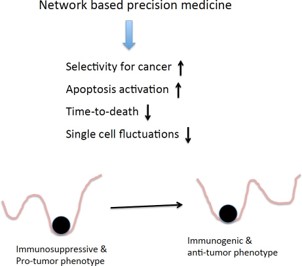
Towards achieving the objective of rapid and selective apoptosis induction in cancer cells, we need to ensure that the targeted apoptotic pathway is sufficiently sensitized and anti-apoptotic roadblocks are removed. Cancer cells are altered self-cells that are expected to be stressed due to genomic/epigenomic alterations (genetic instability), aberrations in signaling such as strong and sustained growth/proliferation signaling (often involving p38/ Jun activation), competition with other cancer cells/clones within a tumor, and altered microenvironment of a tumor [3]. Consequently, expression levels of molecules in the apoptotic stress response pathways such as death receptors and Bax/BH3 only proteins frequently increase, thus cancer cells often exhibit heightened sensitivity to apoptotic stress [5-9] (aptly called primed for death [7]. However, apoptotic sensitivity in cancer cells is sometimes weakened due to loss of tumor suppressor proteins (e.g. RB, p53) and aberrant signaling regulation [3,4]. Tumor suppressors mediate the genetic program that counter malignant growth in cancer cells frequently through suppressing rapid growth/ proliferation and inducing apoptotic stress response. Apoptotic priming in cancer cells could be restored by chemo/radiotherapy, targeted drug therapy, gene therapy, epigenetic targeting and by application of natural extracts. Recent theoretical investigation in my laboratory has put forward a mechanism for distinctive cell death phenotype generation in healthy and cancer cells based on heightened apoptotic sensitivity of cancer cells, thus providing a basis for their rapid and selective elimination [10,11]. In spite of increased vulnerability to cell death in stressed malignant cells, over-expressed anti-apoptotic proteins frequently cause resistance in cancer cell death activation. In many cancers, significant over-expression of anti-apoptotic proteins may allow tumor subpopulations to survive chemotherapeutic treatments and contribute to acquired resistance generation [12,13]. Targeting aberrant signaling through growth/survival/developmental pathways (that seem to sustain overexpression and/or PTMs of anti-apoptotic proteins as indicated by cancer genomics data Figure S1 [14-16] is a frequently utilized strategy in cancer therapy, which could work towards removing apoptotic blocks [17-19]. Mutation targeted therapies, such as drugs targeting cancer cells harboring EGFR, KRAS or BRAF mutations, found to be effective in some cancers [20-22]. Other options include targeting cytokine signaling pathways [23], genetic targeting of anti-apoptotic proteins (through siRNA [24,25], miRNA [26] or oligonucleotide-based methods [27,28], and targeting epigenetic mechanisms [29]. Application of direct inhibitors of over-expressed anti-apoptotic proteins could be an effective strategy (for removing apoptotic roadblocks) that has recently been explored [25,30,31]. In cancer cells, loss of priming and/or increase in anti-apoptotic molecules could result in a slow and stochastic (exhibiting large single cell fluctuations) cell death phenotype [32,33]. Slow elimination of cancer cells could allow the Tumor Microenvironment (TME) to sustain an immunosuppressive, stressed and malignant phenotype. Increased timeto-death may allow cancer cells to acquire additional genetic/ epigenetic changes. Sufficiently rapid elimination of cancer cells, in contrast, is expected to generate immunogenic signals due to release of DAMPs [34] and increased soluble antigens in TME [35,36]. As a consequence, cytokines such as IFNγ may induce immune cell trafficking and activation (Figure S2) [14-16]. Studies of autoimmune and other disorders, such as T1DM and T2DM, may strengthen our understanding of immune response against tumor cells. We expect rapid apoptotic loss of tumor cells should help abolish malignant phenotype of the tumor microenvironment and boost further elimination of malignant cells (Figure 1).
Combinatorial therapeutic strategies towards rapid type 1/ type 2 apoptosis induction in cancer cells
Combinatorial strategies that enhance/restore apoptotic sensitivity of stressed cancer cells and/or reduce the levels of antiapoptotic proteins could be effective towards robust apoptotic elimination of cancer cells. In the previous section we mentioned various possible therapeutic approaches towards sensitizing apoptotic pathways and for removing apoptotic blocks of anti-apoptotic proteins. However, protecting normal cells while achieving a high rate of cancer cell elimination poses additional challenges. Targeted therapies that inhibit tumor driving pathways are often strongly selective for cancer cells. In addition, targeted therapies could be designed to be synergistic to tumor immune response. Even though such targeted therapies sensitize cancer cells towards apoptosis they may still activate the cell death pathways in a slow and stochastic manner (due to loss of apoptotic sensitization and/ or increase in anti-apoptotic molecules through various pathways other than the one targeted). Since a large number of linked pathways influence the apoptotic death pathways and many of them also carry genetic/epigenetic aberrations (in cancer cells), it may become challenging to induce robust cancer cell apoptosis through targeted monotherapies (particularly for late-stage cancers). Presence of sub-populations having distinct genetic/ epigenetic identities in a heterogeneous tumor also poses similar challenges for monotherapy. As mentioned before, such slow elimination of cancer cells could help maintain malignant tumor microenvironment and allow cancer cells to adapt to therapeutic stress through generating new mutations and other mechanisms. Use of BH3 mimetic drugs and dietary compounds for apoptotic priming and inhibition of Bcl2-like anti-apoptotic proteins could prove beneficial in some situations. Even for somewhat non-specific agents (such as some dietary natural compounds), selectivity in cancer cell targeting could be increased based on a more complete elucidation of signaling pathway activation and information of the cancer cell proteome (in a given tumor). Moreover, for many of those beneficial agents’ specificity for cancer cells could be enhanced through targeted delivery approaches. Recent advancements in antibody conjugated drug delivery (to target cells) could help overcome the healthy cell cytotoxicity arising from systemic administration of various anti-cancer agents.
Thus, therapeutic approaches that combine targeted therapies with somewhat less-specific agents could induce apoptotic priming and/or inhibit anti-apoptotic molecules and allow selective elimination of cancer cells through rapid activation of type 1/type 2 apoptotic pathways. Various immunotherapeutic strategies (T cell, NK cell, B cell/antibody based) have gained significant recent attention due to their high selectivity for cancer cells and strong apoptosis induction. In the context of immunotherapy, combinatorial treatments with inhibitors of Bcl2-like proteins, targeted therapies or natural extracts could be beneficial. In addition to the type 2 pathway, some immunotherapeutic strategies could activate the type 1 apoptotic pathway selectively in cancer cells. Targeting of H-Ras signaling pathway combined with liposomal TRAIL delivery [37,38] may robustly activate the cancer cell type 1 apoptotic pathway [11]. We expect rapid elimination of malignant cells, presumably achieved through combinatorial treatments, to alter the pro-tumor and immunosuppressive phenotype of the Tumor Microenvironment (TME) (Figure 1). It may improve immune cell migration in the tumor microenvironment (through a series of cytokine-chemokine cascades), destroy signaling dependency among tumor cells (including cancer stem cells) and the stromal cells in the TME, and alter the stiffness properties in tumor microenvironment. Such phenotypic changes in vivo may curtail cancer chemoresistance generation. Therapeutic benefits from such precision strategies may range from health-span extension to complete remission.
Precision medicine for rapid and selective elimination of cancer cells in individual patients
Network-based combinatorial strategies (that converge on and activate apoptotic pathways) could allow us to achieve selective and rapid elimination of cancer cells [39,40], but the precise strategy is expected to vary in a cancer-type and patient specific manner. Recent cancer omics data indicates cancer-type dependent genomic and transcriptomic profiles thus emphasizing the benefit of cancer-type specific precision therapies. Yet genomic and transcriptomic variability found among tumor samples (for the same cancer type) may pose challenges towards search for precision therapies. Biomarker information for a given tumor (cellular and tumor microenvironmental) could allow patient stratification and help develop combinatorial treatment decisions for a given patient.
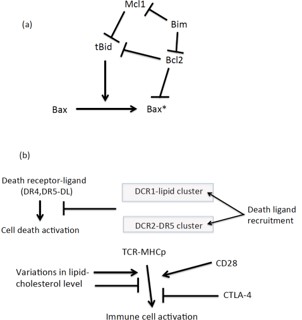
Genetic/epigenetic/transcriptomic changes detected in different regions of a tumor (including single cell experiments) could provide patient-specific information of tumor heterogeneity. Patient health conditions and existing diseases, such as liver disease, autoimmune disorders or immunodeficiency disorders, further underscore the need for precision/personalized medicine. Certain therapies may help achieve rapid elimination of malignant cells but it may also pose increased risk of cytotoxicity to healthy cells. Rapidly dividing activated immune cells and stem cells may have increased apoptotic susceptibility (often through the mitochondrial pathway) and thus could suffer risk of elimination. However, cancer-type specific features in the proteomic profiles of stressed cancer cells may allow us to achieve rapid apoptotic activation selectively in cancer cells. Presence of competing activator/inhibitor proteins and their paralogs (exhibiting affinity variant interactions) generate complex signaling networks (Figure 2), but it may also allow precise targeting of malignant cells. Targeting the such precise targeting [31,41]. In this context, computational approaches could be applied to search for an optimal combinatorial strategy as part of developing cancer precision therapy. We could now elucidate regulatory/engineering mechanisms of large and complex signaling pathways in silico using computational simulations. Once the simulation model is validated by experimental data, controlled in silico studies should allow us to rapidly probe the extent of cell death activation (including time-to-death and its single cell fluctuations [32] for various therapeutic strategies, for both normal and cancer cells. Computational approaches could then be utilized towards developing precise strategies for selective and rapid elimination of cancer cells [40] (Figure 1). When we combine potential mutation targets with possible choices of anti-apoptotic inhibitors/sensitizers the number of possible choices increases quickly. The number of all possible combinatorial strategies is expected to increase enormously with the increase in therapeutic modalities. Synergistically with genomic/epigenomic/ clinical studies and other biological experiments, computational simulations and machine learning/AI could rapidly probe various combinatorial scenarios towards searching precision strategies in cancer therapy. Various parallel programming methods could help in this computational progress.
Precision medicine for cancer should allow us to reprogram the aberrant apoptotic stress response and immune response pathways (in a tumor) in a cancer type specific and/or patient specific manner. Here we explore some precision/personalized medicine options in the context of cancer immunotherapy. Immunotherapeutic strategies (such as T cell or antibody targeting of tumor cells), in addition to achieving high selectivity, could activate apoptosis pathways in a robust manner. Vaccination against tumor antigens may induce strong T cell mediated and/or antibody mediated immune response. When CD8 T cells activate the type 2 apoptosis, tBid mediated activation of Bax is stronger than Bid mediated activation, thus robust apoptotic activation could be achieved provided the type 2 pathway is sufficiently primed. However, impaired T cell activation, such as due to upregulation of molecules involved in negative co-stimulation, is common in many cancers. Targeting of negative costimulatory molecules has shown efficacy in melanoma and some other cancers [42,43]. Combined use of CTLA4 or PD-L1 inhibitors and inhibitors of antiapoptoitc proteins could be effective in some patients. This type of cancer immunotherapy could be supported by agents that prime T cell activation, for example, agents modulating cholesterol metabolism in CD8 T cells [44]. Such combinatorial therapeutic strategies partly rely on epistasis between supporting regulatory modes, which could be utilized towards developing precision medicine for cancer. Using computational modeling we could simulate various possible scenarios of combinatorial therapies to choose an optimal strategy. However, risk of various diseases particularly for patients with existing diseases needs to be carefully evaluated even for such precision strategies designed to achieve effective cancer remission. Therapeutic strategies could be personalized, for example, by assessing autoimmune disease risk in a patient based on MHC haplotype and presence of non-MHC alleles implicated in autoimmune disorders [45]. For patients at risk of autoimmune disorders one may consider targeting signaling pathways impacting cancer cells (and/or tumor microenvironment) to downregulate the expression levels of costimulatory mo-unique Bcl2 family protein profile in cancer cells is an example of lecules that negatively regulate signaling on T cells [1,19]. In many cancers, combinatorial therapy based on TRAIL induction and inhibitors of anti-apoptotic proteins could be an effective strategy. TRAIL induced cytotoxicity is commonly found for Natural Killer (NK) cell and T cell mediated elimination of malignant cells, particularly under cytokine stimulation [46,47]. Additionally, T cell released exosomes (lipid microvesicles) could be equipped with membrane-bound TRAIL but its impact within tumor microenvironments needs further exploration [48,49]. Robust activation of type 1 and/or type 2 apoptotic pathways seems possible under TRAIL based therapy. Engineered ligands similar to TRAIL have been developed that bind with various death and decoy receptors with variable affinity [50-52] and thus could be advantageous for precision medicine. For example, previous studies indicated that certain colon and breast cancer cell lines primarily use TRAIL-R2/ DR5 for apoptosis induction [50,53], whereas in some types of lymphoid malignancies and pancreatic cancers apoptosis induction through TRAIL-R1/DR4 have been reported [54,55]. However, even for a specific type of cancer death/decoy receptor paralog levels often vary significantly among individual patients (cbioportal.org [14-16]. TRAIL variants selective for DR5 (with lower affinity for DCR2) could be effective for many patients as TRAIL-R2/ DR5 is overexpressed in various cancers (consider the following tumor sample: DR4 43.3, DR5 139.9, DCR1 41.2 and DCR2 39.3, in TPM unit; sample is for a lung adenocarcinoma patient TCGA-054426-01; cbioportal.org [12-14]. Death/Decoy Receptor (DR/DCR) paralog composition on cancer cells (Table S1), as well as on impacted healthy cells, should determine the choice of death ligand for treating a specific tumor. Based on our recent studies [11,40], kinetic Monte Carlo simulations of cell death activation could be utilized to search for optimal strategies involving affinity variant TRAIL-like ligands. It might be possible to eliminate cancer cells in a rapid and deterministic manner, while slow apoptosis induction with large single cell fluctuations should allow protection of healthy cells. Use of membrane bound TRAIL has also been recently explored, such as those presented on engineered nanoparticles or engineered cells (such as CAR T cells) [38,56]. Such a strategy could lead to robust activation of the membrane proximal death signaling module in cancer cells and may also curtail growth/survival pathway activation through TRAIL. Nanoparticle based approaches may allow selective delivery of TRAIL-like ligands to the tumor region to avoid adverse health effects (e.g. induction of inflammatory signaling in adipose tissue [57]. Combinatorial strategies are now frequently explored in cancer therapy research. In a recent kinetic Monte Carlo based study we have shown combined use of TRAIL variants and anti-apoptotic inhibitors could induce rapid and selective type 1/type 2 apoptotic induction in malignant cells [40]. Based on genomic/transcriptomic-proteomic/clinical data for a given tumor-type or patient, computational simulations could be utilized to find an optimal combinatorial therapy involving a specific TRAIL variant ligand and anti-apoptotic inhibitors (or agents that prime the cell death pathway).
In the context of anti-apoptotic inhibitor therapy, high doses of a Bcl2 inhibitor may harm activated immune cells, stem cells and other healthy cells. However, a lower dose of Bcl2 inhibitors combined with natural dietary compounds and/or mutation targeted therapies could achieve required Bcl2 inhibition and cell death activation. Progress in stem cell therapy may support the application of direct inhibitors of Bcl2-like antiapoptotic proteins. In this context, direct inhibition of Bcl2-like proteins by BH3 mi-metics could be beneficial such as when over-expression of Bcl2like proteins is caused by high copy numbers of Bcl2-like genes or when resistance to Tyrosine Kinase Inhibitors (TKIs) is emerging. Towards achieving high selectivity for malignant cells, the Bcl2 paralog expressions in a given tumor could be targeted using paralog selective inhibitors of Bcl2 proteins (BH3 mimetics) [41,58,59]. Paralog expression-based targeting of Bcl2-like proteins could also be effective for selective elimination of cancer stem cells such as leukemic stem cells [60]. Choosing one or more options for inhibiting various anti-apoptotic proteins in a cancer type specific and/ or patient specific manner could be part of precision/personalized strategies to treat cancer. In various cancers, such as lung adenocarcinoma, some patients have been found to exhibit Mcl1 copy number amplifications (https://www.cbioportal.org) [14-16], which could be targeted through MCl1 specific BH3 mimetics. In some patients, targeting KRAS signaling could lead to a reduction in the Mcl1 level (Figure S1). Targeting elevated levels of USP9X or USP9X-Mcl1 interaction could be effective in some cancers [61]. In a general scenario, elucidation of pathways that cause and/or sustain overexpression of Bcl2-like proteins, based on genetic data and other biomarkers, could help develop rational strategies for inhibition of Bcl2-like proteins. In addition to BH3 mimetics, we could aim for targeted inhibition of Bcl2 proteins through antagonizing survival/developmental signaling (that sustain Bcl2-like protein overexpression), targeting genetic/epigenetic and degradation pathways, and cytokine-based therapy. Another option is network based indirect inhibition through targeting other Bcl2 paralog proteins and/or BIM induction (Figure 2a). In addition to biological experiments, one could also computationally simulate the complex interaction network of Bid-Bax-Bcl2 paralogs that regulate mitochondrial apoptosis, and assess the potential impact of a particular BH3 mimetic inhibitor on healthy and cancer cells. In this context, machine learning/AI based models could also be developed based on data from biological experiments, clinical studies and simulation. Computational approaches could be generally useful when searching for precision strategies to optimally activate the apoptotic stress response in cancer cells.
References
- Kuby’s Immunology, Media Update. 8th ed. Basingstoke: Macmillan Learning. 2025.
- Zheng D, Liwinski T, Elinav E. Interaction between microbiota and immunity in health and disease. Cell Res. 2020; 30: 492–506.
- Hanahan D, Weinberg RA. The hallmarks of cancer. Cell. 2000; 100: 57–70.
- Hanahan D, Weinberg RA. Hallmarks of cancer: the next generation. Cell. 2011; 144: 646–674.
- Pan G, Ni J, Wei YF, Yu G, Gentz R, Dixit VM. An antagonist decoy receptor and a death domain-containing receptor for TRAIL. Science. 1997; 277: 815–818.
- Sheridan JP, Marsters SA, Pitti RM, Gurney A, Skubatch M, Baldwin D, et al. Control of TRAIL-induced apoptosis by a family of signaling and decoy receptors. Science. 1997; 277: 818–821.
- Certo M, Moore VDG, Nishino M, Wei G, Korsmeyer S, Armstrong SA, et al. Mitochondria primed by death signals determine cellular addiction to antiapoptotic BCL-2 family members. Cancer Cell. 2006; 9: 351–365.
- Refaat A, Abd-Rabou A, Reda A. TRAIL combinations: the new ‘trail’ for cancer therapy. Oncol Lett. 2014; 7: 1327–1332.
- Robinson M, Jiang P, Cui J, Li J, Wang Y, Swaroop M, et al. Global genechip profiling to identify genes responsive to p53-induced growth arrest and apoptosis in human lung carcinoma cells. Cancer Biol Ther. 2003; 2: 406–415.
- Raychaudhuri S, Das SC. Low probability activation of Bax/Bak can induce selective killing of cancer cells by generating heterogeneity in apoptosis. J Healthc Eng. 2013; 4: 512891.
- Raychaudhuri S. Kinetic Monte Carlo study of the type 1/type 2 choice in apoptosis elucidates selective killing of cancer cells under death ligand induction. Open J Apoptosis. 2015; 4: 22–39.
- Marusyk A, Almendro V, Polyak K. Intra-tumour heterogeneity: a looking glass for cancer? Nat Rev Cancer. 2012; 12: 323–334.
- Ogden A, Rida PCG, Reid MD, Kucuk O, Aneja R. Die-hard survivors: heterogeneity in apoptotic thresholds may underlie chemoresistance. Expert Rev Anticancer Ther. 2015; 15: 277–281.
- Cerami E, Gao J, Dogrusoz U, Gross BE, Sumer SO, Aksoy BA, et al. The cBio cancer genomics portal: an open platform for exploring multidimensional cancer genomics data. Cancer Discov. 2012; 2: 401–404.
- Gao J, Aksoy BA, Dogrusoz U, Dresdner G, Gross B, Sumer SO, et al. Integrative analysis of complex cancer genomics and clinical profiles using the cBioPortal. Sci Signal. 2013; 6: pl1.
- de Bruijn I, Kundra R, Mastrogiacomo B, Tran TN, Sikina L, Mazor T, et al. Analysis and visualization of longitudinal genomic and clinical data from the AACR Project GENIE Biopharma Collaborative in cBioPortal. Cancer Res. 2023; 83: 3861–3867.
- Pottier C, Fresnais M, Gilon M, Jérusalem G, Longuespée R, Sounni NE. Tyrosine kinase inhibitors in cancer: breakthrough and challenges of targeted therapy. Cancers. 2020; 12: 731.
- Khatra H, Bose C, Sinha S. Discovery of Hedgehog antagonists for cancer therapy. Curr Med Chem. 2017; 24: 2033–2058.
- Nguyen C, Yi C. YAP/TAZ signaling and resistance to cancer therapy. Trends Cancer. 2019; 5: 283–296.
- Liao BC, Lin CC, Yang JC-H. Second and third-generation epidermal growth factor receptor tyrosine kinase inhibitors in advanced nonsmall cell lung cancer. Curr Opin Oncol. 2015; 27: 94.
- Ostrem JM, Peters U, Sos ML, Wells JA, Shokat KM. K-Ras(G12C) inhibitors allosterically control GTP affinity and effector interactions. Nature. 2013; 503: 548–551.
- Huang L, Guo Z, Wang F, Fu L. KRAS mutation: from undruggable to druggable in cancer. Signal Transduct Target Ther. 2021; 6: 1–20.
- Herbaux C, Kornauth C, Poulain S, Chong SJF, Collins MC, Valentin R, et al. BH3 profiling identifies ruxolitinib as a promising partner for venetoclax to treat T-cell prolymphocytic leukemia. Blood. 2021; 137: 3495–3506.
- Kunze D, Kraemer K, Erdmann K, Froehner M, Wirth MP, Fuessel S. Simultaneous siRNA-mediated knockdown of antiapoptotic BCL2, Bcl-xL, XIAP and survivin in bladder cancer cells. Int J Oncol. 2012; 41: 1271–1277.
- Owens TW, Gilmore AP, Streuli CH, Foster FM. Inhibitor of apoptosis proteins: promising targets for cancer therapy. J Carcinog Mutagen. 2013: S14-004.
- Di Leva G, Garofalo M, Croce CM. microRNAs in cancer. Annu Rev Pathol. 2014; 9: 287–314.
- Cotter FE, Johnson P, Hall P, Pocock C, al Mahdi N, Cowell JK, et al. Antisense oligonucleotides suppress B-cell lymphoma growth in a SCID-hu mouse model. Oncogene. 1994; 9: 3049–3055.
- Cotter FE, Fennell DA. Bcl-2 antisense oligonucleotides therapy for cancer. In: Rak J, editor. Oncogene-directed therapies. Totowa (NJ): Humana Press; 2003. p. 453–468.
- Stahl M, Kohrman N, Gore SD, Kim TK, Zeidan AM, Prebet T. Epigenetics in cancer: a hematological perspective. PLoS Genet. 2016; 12: e1006193.
- Sattler M, Liang H, Nettesheim D, Meadows RP, Harlan JE, Eberstadt M, et al. Structure of Bcl-xL-Bak peptide complex: recognition between regulators of apoptosis. Science. 1997; 275: 983–986.
- Letai A, Bassik MC, Walensky LD, Sorcinelli MD, Weiler S, Korsmeyer SJ. Distinct BH3 domains either sensitize or activate mitochondrial apoptosis, serving as prototype cancer therapeutics. Cancer Cell. 2002; 2: 183–192.
- Skommer J, Brittain T, Raychaudhuri S. Bcl-2 inhibits apoptosis by increasing the time-to-death and intrinsic cell-to-cell variations in the mitochondrial pathway of cell death. Apoptosis. 2010; 15: 1223–1233.
- Roux J, Hafner M, Bandara S, Sims JJ, Hudson H, Chai D, et al. Fractional killing arises from cell-to-cell variability in overcoming a caspase activity threshold. Mol Syst Biol. 2015; 11: 803.
- Kepp O, Tesniere A, Schlemmer F, Michaud M, Senovilla L, Zitvogel L, et al. Immunogenic cell death modalities and their impact on cancer treatment. Apoptosis. 2009; 14: 364–375.
- Jackaman C, Majewski D, Fox SA, Nowak AK, Nelson DJ. Chemotherapy broadens the range of tumor antigens seen by cytotoxic CD8+ T cells in vivo. Cancer Immunol Immunother. 2012; 61: 2343–2356.
- Gulley JL, Madan RA, Pachynski R, Mulders P, Sheikh NA, Trager J, et al. Role of antigen spread and distinctive characteristics of immunotherapy in cancer treatment. J Natl Cancer Inst. 2017; 109: djw261.
- Twomey JD, Kim SR, Zhao L, Bozza WP, Zhang B. Spatial dynamics of TRAIL death receptors in cancer cells. Drug Resist Updat. 2015; 19: 13–21.
- De Miguel D, Gallego-Lleyda A, Anel A, Martinez-Lostao L. Liposome-bound TRAIL induces superior DR5 clustering and enhanced DISC recruitment in histiocytic lymphoma U937 cells. Leuk Res. 2015; 39: 657–666.
- Skommer J, Das SC, Nair A, Brittain T, Raychaudhuri S. Nonlinear regulation of commitment to apoptosis by simultaneous inhibition of Bcl-2 and XIAP in leukemia and lymphoma cells. Apoptosis. 2011; 16: 619–626.
- Raychaudhuri S. In silico approach to find an optimal strategy in selective targeting of cancer cells. J Comput Sci Syst Biol. 2016: 9.
- Deng J, Carlson N, Takeyama K, Dal Cin P, Shipp M, Letai A. BH3 profiling identifies three distinct classes of apoptotic blocks to predict response to ABT-737 and conventional chemotherapeutic agents. Cancer Cell. 2007; 12: 171–185.
- Leach DR, Krummel MF, Allison JP. Enhancement of antitumor immunity by CTLA-4 blockade. Science. 1996; 271: 1734–1736.
- Shen H, Yang EH, Conry M, Fiveash J, Contreras C, Bonner JA, et al. Predictive biomarkers for immune checkpoint blockade and opportunities for combination therapies. Genes Dis. 2019; 6: 232–246.
- Yang W, Bai Y, Xiong Y, Zhang J, Chen S, Zheng X, et al. Potentiating the antitumour response of CD8+ T cells by modulating cholesterol metabolism. Nature. 2016; 531: 651–655.
- Matzaraki V, Kumar V, Wijmenga C, Zhernakova A. The MHC locus and genetic susceptibility to autoimmune and infectious diseases. Genome Biol. 2017; 18: 76.
- Zamai L, Ahmad M, Bennett IM, Azzoni L, Alnemri ES, Perussia B. Natural killer cell-mediated cytotoxicity: differential use of TRAIL and Fas ligand by immature and mature primary human NK cells. J Exp Med. 1998; 188: 2375–2380.
- Smyth MJ, Takeda K, Hayakawa Y, Peschon JJ, van den Brink MRM, Yagita H. Nature’s TRAIL—on a path to cancer immunotherapy. Immunity. 2003; 18: 1–6.
- Martínez-Lorenzo MJ, Anel A, Gamen S, Monleon I, Lasierra P, Larrad L, et al. Activated human T cells release bioactive Fas ligand and APO2 ligand in microvesicles. J Immunol. 1999; 163: 1274– 1281.
- Fu W, Lei C, Liu S, Cui Y, Wang C, Qian K, et al. CAR exosomes derived from effector CAR-T cells have potent antitumour effects and low toxicity. Nat Commun. 2019; 10: 4355.
- Kelley RF, Totpal K, Lindstrom SH, Mathieu M, Billeci K, DeForge L, et al. Receptor-selective mutants of apoptosis-inducing ligand 2/ tumor necrosis factor-related apoptosis-inducing ligand reveal a greater contribution of death receptor 5 than DR4 to apoptosis signaling. J Biol Chem. 2005; 280: 2205–2212.
- van der Sloot AM, Tur V, Szegezdi E, Mullally MM, Cool RH, Samali A, et al. Designed tumor necrosis factor-related apoptosis-inducing ligand variants initiating apoptosis exclusively via the DR5 receptor. Proc Natl Acad Sci U S A. 2006; 103: 8634–8639.
- Gasparian ME, Chernyak BV, Dolgikh DA, Yagolovich AV, Popova EN, Sycheva AM, et al. Generation of new TRAIL mutants DR5-A and DR5-B with improved selectivity to death receptor 5. Apoptosis. 2009; 14: 778–787.
- Lemke J, von Karstedt S, Zinngrebe J, Walczak H. Getting TRAIL back on track for cancer therapy. Cell Death Differ. 2014; 21: 1350– 1364.
- MacFarlane M, Kohlhaas SL, Sutcliffe MJ, Dyer MJS, Cohen GM. TRAIL receptor-selective mutants signal to apoptosis via TRAIL-R1 in primary lymphoid malignancies. Cancer Res. 2005; 65: 11265–1270.
- Lemke J, Noack A, Adam D, Tchikov V, Bertsch U, Röder C, et al. TRAIL signaling is mediated by DR4 in pancreatic tumor cells despite the expression of functional DR5. J Mol Med. 2010; 88: 729– 740.
- Nai Y, Du L, Shen M, Li T, Huang J, Han X, et al. TRAIL-R1-targeted CAR-T cells exhibit dual antitumor efficacy. Front Mol Biosci. 2021; 8: 756599.
- Zoller V, Funcke JB, Roos J, Dahlhaus M, Abd El Hay M, Holzmann K, et al. TRAIL (TNF-related apoptosis-inducing ligand) induces an inflammatory response in human adipocytes. Sci Rep. 2017; 7: 5691.
- Renault TT, Elkholi R, Bharti A, Chipuk JE. BCL-2 homology domain 3 mimetics demonstrate differential activities dependent upon the functional repertoire of proand anti-apoptotic BCL-2 family proteins. J Biol Chem. 2014; 289: 26481–26491.
- Song T, Chai G, Liu Y, Xie M, Chen Q, Yu X, et al. Mechanism of synergy of BH3 mimetics and paclitaxel in chronic myeloid leukemia cells: Mcl-1 inhibition. Eur J Pharm Sci. 2015; 70: 64–71.
- Bencomo-Álvarez AE, Rubio AJ, Gonzalez MA, Eiring AM. Energy metabolism and drug response in myeloid leukaemic stem cells. Br J Haematol. 2019; 186: 524–537.
- Peddaboina C, Jupiter D, Fletcher S, Yap JL, Rai A, Tobin RP, et al. The downregulation of Mcl-1 via USP9X inhibition sensitizes solid tumors to Bcl-xL inhibition. BMC Cancer. 2012; 12: 541.