Introduction
Multiple Endocrine Neoplasia (MEN) is a rare hereditary neoplastic disease with familial clustering, characterized by benign or malignant tumors involving multiple endocrine organs. MEN1 is the most common type of it. Multiple Endocrine Neoplasia type 1, is an autosomal dominant hereditary disease characterized by the combined occurrence of tumors in multiple endocrine glands.
MEN1 is an autosomal, dominantly inherited disease, and its diagnosis requires more than 2 or more related tumors or mutations in the MEN1 gene. Treatment is based on surgical resection, as well as growth inhibitor analogs. Lifelong surveillance is required, and immediate family members should be screened early.
Case presentation
General condition
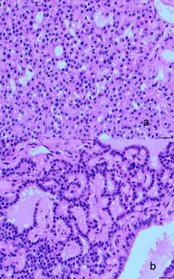
The patient is a 52-year-old woman. Consulted for a multisite neuroendocrine tumor detected 5 years ago and lung metastasis 4 years ago. On July 13, 2019, the patient was hospitalized at Ruijin Hospital of Shanghai Jiaotong University for “parathyroid adenoma”, and underwent pancreatic biopsy, Biopsy pathology suggests: neuroendocrine tumor; Genetic testing: multiple endocrine tumor type 1 (MEN 1). On 01/22/2021, she underwent lung nodule puncture at the Affiliated Cancer Hospital of Fudan University, the postoperative pathology showed that cancer cells were seen, which tended to be adenocarcinoma. And she underwent surgery at this hospital on 02/22/2021. Postoperative pathology: spindle cell tumor, partly epithelioid, tending towards neuroendocrine tumor. It corresponds to atypical carcinoid tumor. Tumor cells: AE1/AE3(+), CK(+), CK7 (few +), CK20 (-), Syn (+), CgA (+), CD56(+), Ki67 (5-8%+), CD34(-), STAT6(-), S100(-), p40(-), Des-min(-). In June 2021, the patient underwent gallium PET/CT: Postoperative atypical lung cancer in the left lung, with metastasis to the left hilar lymph nodes; the head and body of the pancreas are considered to possibly be multiple neuroendocrine tumors. Since August 2021, the patient has been regularly treated in our hospital, and was given ‘‘octreotide acetate microsphere 30 mg’’ combined with traditional Chinese medicine on schedule. During this period, on 08/29/2023, Re-examination of gallium PET/CT: After the treatment of pancreatic intraneural tumors, pancreatic head and pancreatic body and left hilar lymph node shadow considered to still have active tumor tissue after treatment of pancreatic neuroendocrine tumor; Multiple adenoma of the right adrenal gland. On 11/30/2023, the patient went to Shanghai Fudan University Cancer Hospital for double parathyroid tumor resection due to repeated hypercalcemia. Postoperative pathology: Parathyroid adenoma (Figure 1). Immunohistochemical result: Tumor cells AE1/ AE3(+), Syn(+), CgA(+), INSM1(-), Ki-67(+, about 2%), Calcitonin(-), PTH(+), GATA3(+).
Postoperative pathology: She has a history of type 2 diabetes mellitus and hypertension.
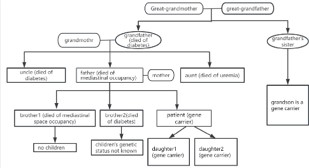
Family history of diseases: The patient’s daughter 1 showed MEN1-like syndrome manifestations, and the gene test was performed: MEN1 pathogenic mutation. Re-section of left parathyroid tumor was performed on 11/30/2023, Postoperative pathology: (left inferior parathyroid) parathyroid adenoma. Immunohistochemical result: Tumor cells AE1/AE3(+), Syn(foci +), CgA(+), INSM1(-), Ki-67(+, about 5%), Calcitonin(-), PTH(+), GATA3(+). Daughter 2 underwent an endoscopic pancreatic biopsy on 7/23/2024. The pathology report confirmed a pancreatic neuroendocrine tumor. The patient’s father and brother 1 had a history of “mediastinal space occupation”, and the grandfather, uncle and brother 2 had a history of “type 2 diabetes mellitus”, Both daughters and a cousin were found to have MEN1 gene mutations (Figure 2).
Diagnosis basis
Based on the previous hormone levels of calcium, parathyroid hormone, MRI, CT and gallium PET/CT, the patient can be initially diagnosed as having multiple neuroendocrine tumors. Based on the patient’s genetic test results and family history, a definitive diagnosis of multiple neuroendocrine tumor type 1 can be made.
Discussion
The prevalence of Multiple Endocrine Neoplasia (MEN) is relatively low. In recent years, with the refinement and introduction of genetic testing, various related biomarkers, advancements in imaging techniques, and the enhancement of treatment methods such as medication, surgery, and radiation therapy, the incidence, quality of life, and mortality of MEN patients have significantly improved [1]. According to the different genetic characteristics, MEN can be divided into the types of MEN1, MEN2, MEN4 and MEN5, and MEN2 can further be divided into MEN2A and MEN2B (also known as MEN3), each type having its unique endocrine tumors, with MEN1 being the most common type.
MEN1 is characterized by the combined occurrence of primary hyperparathyroidism, gastroentero pancreatic neuroendocrine tumors, pituitary adenomas, adrenocortical tumors, and other neoplasms. The most common clinical features of the disease: primary hyperparathyroidism, usually resulting from involvement of parathyroid hyperplasia and/or adenomas [2], whose most common initial manifestation is hypercalcemia, with consequent clinical manifestations such as kidney stones, osteoporosis, and neuromuscular changes (such as fatigue, cognitive function changes, etc.); Involvement of the pancreas and duodenum can lead to peptic ulcers and clinical symptoms related to hypoglycemia; Involvement of the pituitary gland can lead to conditions such as acromegaly, menstrual irregularities, and sexual dysfunction; Involvement of other sites may occasionally lead to diarrhea in patients, skin diseases, central nervous system and soft tissue and other non-internal systems. Some studies have also shown that some patients with MEN1-associated hyperparathyroidism may show no clinical symptoms at all [3].
The annual incidence of MEN1 is approximately 3-10/100,000 [4,5], and no significant gender differences have been found for this disease [6]. The age at diagnosis of MEN1 varies according to clinical manifestations and diagnostic mode. The disease affects all age groups, from infants to the elderly, and is uncommon in childhood (as early as less than or equal to 5 years of age). Since then, the penetrance of the disease generally shows a trend of increasing with age, but over 95% of patients develop the disease before the age of 50 [7]. Despite advances in treatment, patients’ life expectancy remains limited, extending from 55 to 70 years with treatment [8] and reaching an average of 50 years without treatment [9]. According to the diagnostic criteria for MEN1 proposed by the ES in 2012, it can be established based on one of the following three criteria: 1) the presence of two or more primary endocrine tumors associated with MEN1(i.e., parathyroid adenomas, pancreatic tumors, and pituitary adenomas); 2) A first-degree relative of an MEN1 patient has a tumor associated with MEN1; 3) There are no clinical symptoms or no correlation with MEN1, but there were abnormal biochemical test markers, imaging tests, and the presence of a MEN1 gene mutation had been confirmed. but there are biochemical indicators, abnormal imaging tests, and MEN1 gene mutations have been confirmed. In addition, 8%-14% of patients show a non-familial or sporadic form [10]. The diagnosis of MEN1 prioritizes tests for blood calcium, blood phosphorus, and Parathyroid Hormone (PTH) Testing, blood glucose, pituitary MRI, insulin and C-peptide, anterior pituitary hormone levels, and serum gastrin; Optional tests include neck ultrasound, parathyroid dynamics imaging, pancreatic multiphase-enhanced CT, PETCT, and MEN1 gene testing.
The pathogenesis of MEN1 is associated with mutations in the MEN1 gene, which is located on human chromosome 11. The structure of the gene contains 10 exons, which encode the protein composed of 610 amino acids Menin protein. The Menin protein is important for the regulation of gene expression in the nucleus and the cell division cycle [9]. Menin protein plays an important role in the regulation of gene expression and cell division cycle in the cell nucleus [9]. MEN1 gene plays a role in suppressing cancer genes in neuroendocrine tumors. Its deletion or mutation leads to the loss of function of oncogenes, and then leads to neuroendocrine tumors [11]. MEN1 is inherited in an autosomal dominant pattern with high penetrance and can be diagnosed based on clinical manifestations, family history, or genetic characteristics. MEN1 gene testing helps to clarify the specific diagnosis of MEN1 and can identify asymptomatic carriers at an early stage [12].
Since the discovery of the MEN1 gene in 1997, more than 1,300 different mutations have been described in the relevant literature [13]. It has also been reported that even when family members possess identical mutations, there is no clear genotypephenotype correlation between specific mutations and the tumor spectrum associated with MEN1 [14,15]. To make matters more complicated, according to clinical diagnostic criteria, about 10% to 30% of patients have no MEN1 gene mutation, but are also diagnosed with MEN1 [15]. According to guideline recommendations, genetic testing is the standard for the diagnosis of MEN1 syndrome in patients, and for patients with a clinical or genetic diagnosis of MEN1, an intensive regimen of clinical, biochemical, and radiological monitoring is carried out from early childhood with the aim of early detection and treatment of tumors [10,14]; All first-degree relatives of patients diagnosed with MEN1 and MEN1 gene carriers should undergo genetic testing for MEN1. Testing for MEN1 strain mutations is recommended in individuals with atypical MEN1 phenotypes, and individuals found to have MEN1 strain mutations should be screened regularly for the development of MEN1-associated tumors [10].
When two endocrine tumors are present in the body at the same time or when a first-degree relative of an MEN1 patient develops one endocrine tumor, it is necessary to seek medical attention promptly to confirm the diagnosis of MEN1 and to consider surgical treatment. Treatment for MEN1 usually involves surgical removal of the tumor, and either way, patients with MEN-1 require lifelong monitoring. Surgical resection is the main treatment for MEN1-related tumors. For patients with hyperparathyroidism, if there are clinical manifestations of thyroid parathyroid hyperplasia or other related abnormalities involved, surgical treatment of parathyroid adenoma is required [10]. For pancreatic neuroendocrine tumors over 2 cm or with malignant clinical manifestations, surgical resection should be performed at the earliest possible time, regardless of their function [4,10]. For patients who are unable to undergo surgery or have contraindications to surgery, individualized and targeted selection of therapies such as control of hormone secretion, growth inhibitor analogues, targeting and radiotherapy is required according to the specific condition of the patient. Drug treatment is mainly to control the symptoms of abnormal hormone secretion, somatostatin analogues and antitumor proliferation [10]. The first-line pharmacological treatment of MEN1-associated NET is usually somatostatin drugs [16], Currently, three growth inhibitor analogs: octreotide, pareptilide, and lanreotide, are already being applied in the clinical treatment of NET [17]. The patient with MEN1 type has been on regular postoperative maintenance therapy with octreotide combined with traditional Chinese medicine in our hospital until now, with regular monitoring, and his condition is currently stable.
Conclusion
To sum up, the clinical case in this article describes in detail a rare case of MEN1-type disease. For this particular patient, despite the early detection of parathyroid adenoma and the presence of multiple family members with the condition, she did not undergo treatment at the time of the initial clinical diagnosis due to personal reasons, which resulted in the subsequent development of multiple endocrine tumors in the left lung, pulmonary hilar lymph nodes, head and body of the pancreas, and adrenal glands, as well as the need for bilateral parathyroidectomy. The diagnosis and management of this case suggests that early diagnosis, genetic testing, early treatment of symptomatic therapy, regular monitoring and follow-up are crucial for clinicians in diagnosing MEN1 disease. Although this case achieved good therapeutic effects, there are still some problems in the diagnosis and treatment process, such as the lack of detailed genetic testing reports of patients and their children, and the absence of long-term follow-up data due to the patient’s visits to multiple hospitals. Future studies can further enhance the long-term follow-up of the patient in order to assess the long-term effects of the treatment and the patient’s quality of life.
Ethics statement: Written informed consent was obtained from the participant/patient(s) for the publication of this case report.
References
- Effraimidis G, Knigge U, Rossing M, Oturai P, Rasmussen ÅK, FeldtRasmussen U. Multiple Endocrine Neoplasia type 1 (MEN-1) and Neuroendocrine Neoplasms (NENs). Semin Cancer Biol. 2022; 79: 141-162.
- Lu L, Liang J, Yu X, et al. Clinical study of a family line with multiple endocrine adenomatosis type 1 combined with Marfan syndrome. Joint Military Medicine. 2023; 37: 1003-1007+1035.
- Schaaf L, Pickel J, Zinner K, et al. Developing effective screening strategies in multiple endocrine neoplasia type 1 (MEN 1) on the basis of clinical and sequencing data of German patients with MEN 1. Exp Clin Endocrinol Diabetes. 2007; 115: 509-517.
- Al-Salameh A, Cadiot G, Calender A, Goudet P, Chanson P. Clinical aspects of multiple endocrine neoplasia type 1. Nat Rev Endocrinol. 2021; 17: 207-224.
- Goudet P, Cadiot G, Barlier A, et al. French guidelines from the GTE, AFCE and ENDOCAN-RENATEN (Groupe d’étude des Tumeurs Endocrines/Association Francophone de Chirurgie Endocrinienne/ Reseau national de prise en charge des tumeurs endocrines) for the screening, diagnosis and management of Multiple Endocrine Neoplasia Type 1. Ann Endocrinol (Paris). 2024; 85: 2-19.
- Modica R, Liccardi A, Minotta R, et al. Neuroendocrine Tumors and Survival Rates in Multiple Endocrine Neoplasia Type 1 Patients: Impact of Gender Difference. Neuroendocrinology. 2025; 115: 364-370.
- Romanet P, Mohamed A, Giraud S, et al. UMD-MEN1 Database: An Overview of the 370 MEN1 Variants Present in 1676 Patients from the French Population. J Clin Endocrinol Metab. 2019; 104: 753764.
- Manoharan J, Albers MB, Rinke A, Adelmeyer J, Görlach J, Bartsch DK. Multiple Endocrine Neoplasia Type 1. Dtsch Arztebl Int. 2024; 121: 527-533.
- Zúñiga B, Carpo N, Madrid S, Soto N. Revisión de Neoplasia endocrina múltiple tipo 1. A propósito de un caso clínico [Review of Multiple Endocrine Neoplasia Type 1 Based on a Clinical Case]. Rev Med Chil. 2024; 152: 724-729.
- Thakker RV, Newey PJ, Walls GV, et al. Clinical practice guidelines for multiple endocrine neoplasia type 1 (MEN1). J Clin Endocrinol Metab. 2012; 97: 2990-3011.
- Fan H, Wang Z. Research progress of MEN1 in digestive system tumors. Journal of Anhui Medical University. 2024; 59: 726-736.
- Thakker RV. Multiple endocrine neoplasia--syndromes of the twentieth century. J Clin Endocrinol Metab. 1998; 83: 2617-2620.
- Falchetti A. Genetics of multiple endocrine neoplasia type 1 syndrome: what’s new and what’s old. F1000Res. 2017; 6: F1000 Faculty Rev-73.
- Newey PJ, Newell-Price J. MEN1 Surveillance Guidelines: Time to (Re)Think?. J Endocr Soc. 2022; 6: bvac001.
- Kim B, Lee SH, Ahn CH, et al. Genetic Landscape and Clinical Manifestations of Multiple Endocrine Neoplasia Type 1 in a Korean Cohort: A Multicenter Retrospective Analysis. Endocrinol Metab (Seoul). 2024; 39: 956-964.
- Grozinsky-Glasberg S, Shimon I, Korbonits M, Grossman AB. Somatostatin analogues in the control of neuroendocrine tumours: efficacy and mechanisms. Endocr Relat Cancer. 2008; 15: 701-720.
- Brandi ML, Agarwal SK, Perrier ND, Lines KE, Valk GD, Thakker RV. Multiple Endocrine Neoplasia Type 1: Latest Insights. Endocr Rev. 2021; 42: 133-170.